Explore rare and important works by leading artists from the Continent
Goodman Secondary Market
Goodman Advisory
Head-Image
Launching this week during Investec Cape Town Art Fair, Goodman Advisory, a new platform for highly bespoke secondary market masterworks. Visit our dedicated space and debut presentation at Goodman Gallery Cape Town this week to explore rare and important works by leading artists from the Continent.
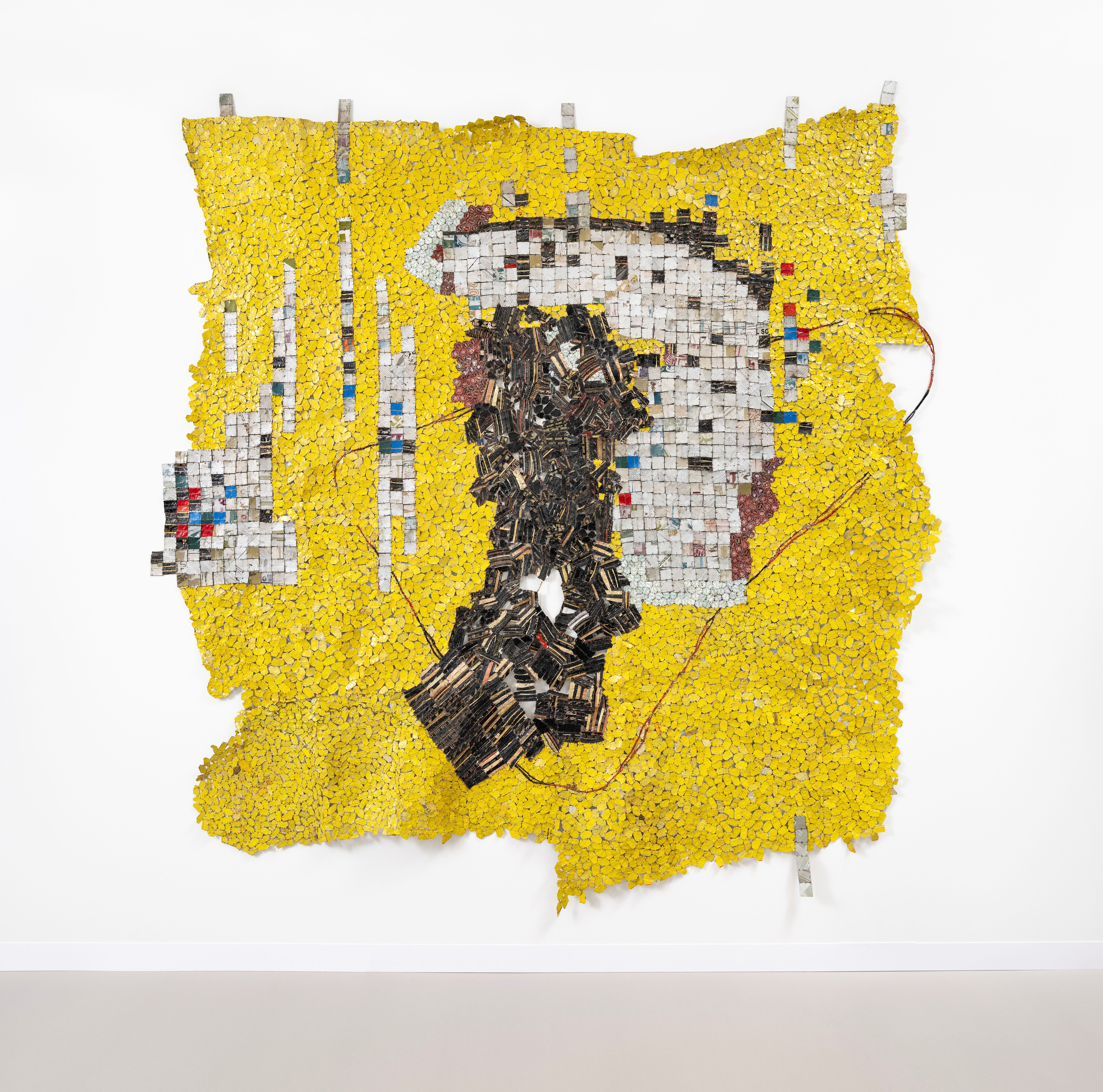
EL ANATSUI
Liba, 2025
Aluminium, copper wire and nylon string
Work: 301 x 297 cm (118.5 x 116.9 in.)
Unique
In his sculptures and installations, El Anatsui transforms simple, everyday objects into grand, totemic assemblages. He combines such disparate materials as bottle caps, printing plates, cassava graters, copper wiring, and sheet metal into both floor-based sculptures and shimmering wall pieces that sway and flex like cloth, despite their rigid composite materials. In transforming discarded objects into large-scale artworks, Ghanaian-born Anatsui explores the effects of human consumption on the environment and the fraught material and ideological relations between Africa and the Western world at large.
Provenance
Goodman Gallery
Exhibition History
Art Basel 2025 19/06/2025 - 22/06/2025 Basel Artfair
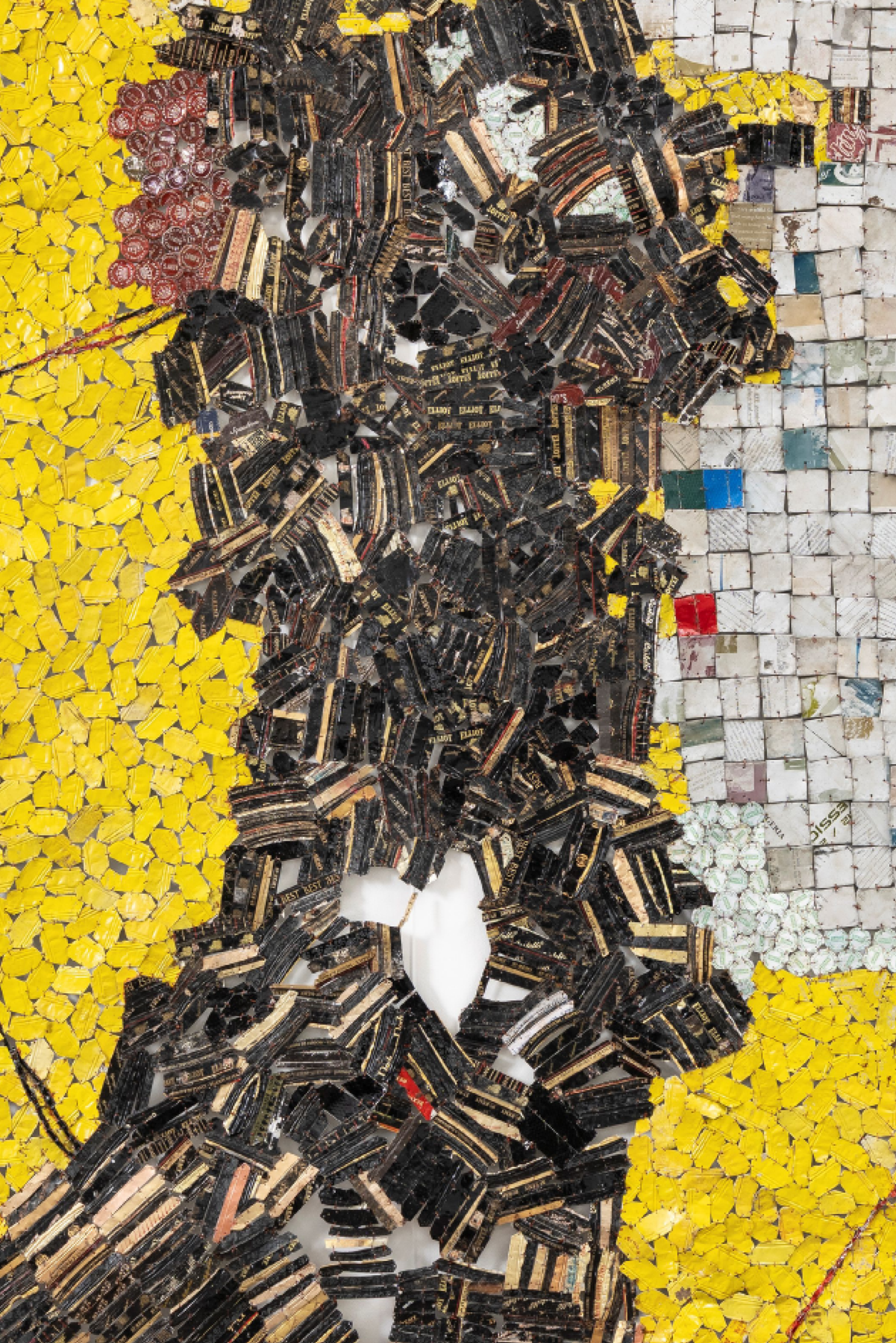
In his sculptures and installations, El Anatsui transforms simple, everyday objects into grand, totemic assemblages. He combines such disparate materials as bottle caps, printing plates, cassava graters, copper wiring, and sheet metal into both floor-based sculptures and shimmering wall pieces that sway and flex like cloth, despite their rigid composite materials. In transforming discarded objects into large-scale artworks, Ghanaian-born Anatsui explores the effects of human consumption on the environment and the fraught material and ideological relations between Africa and the Western world at large.
Provenance
Goodman Gallery
Private Collection, SA
Exhibition History
Art Basel 2025 19/06/2025 - 22/06/2025 Basel Artfair
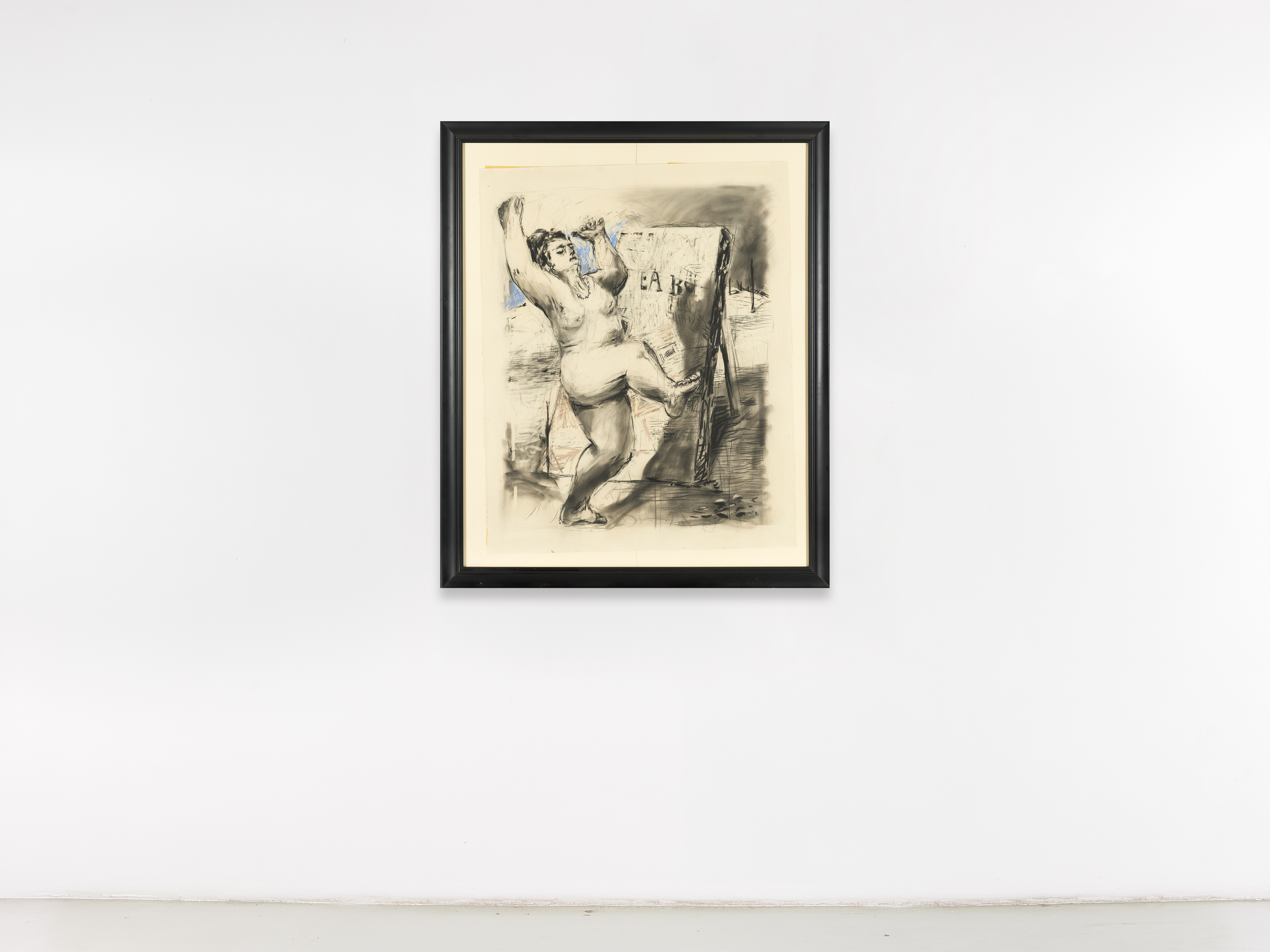
WILLIAM KENTRIDGE
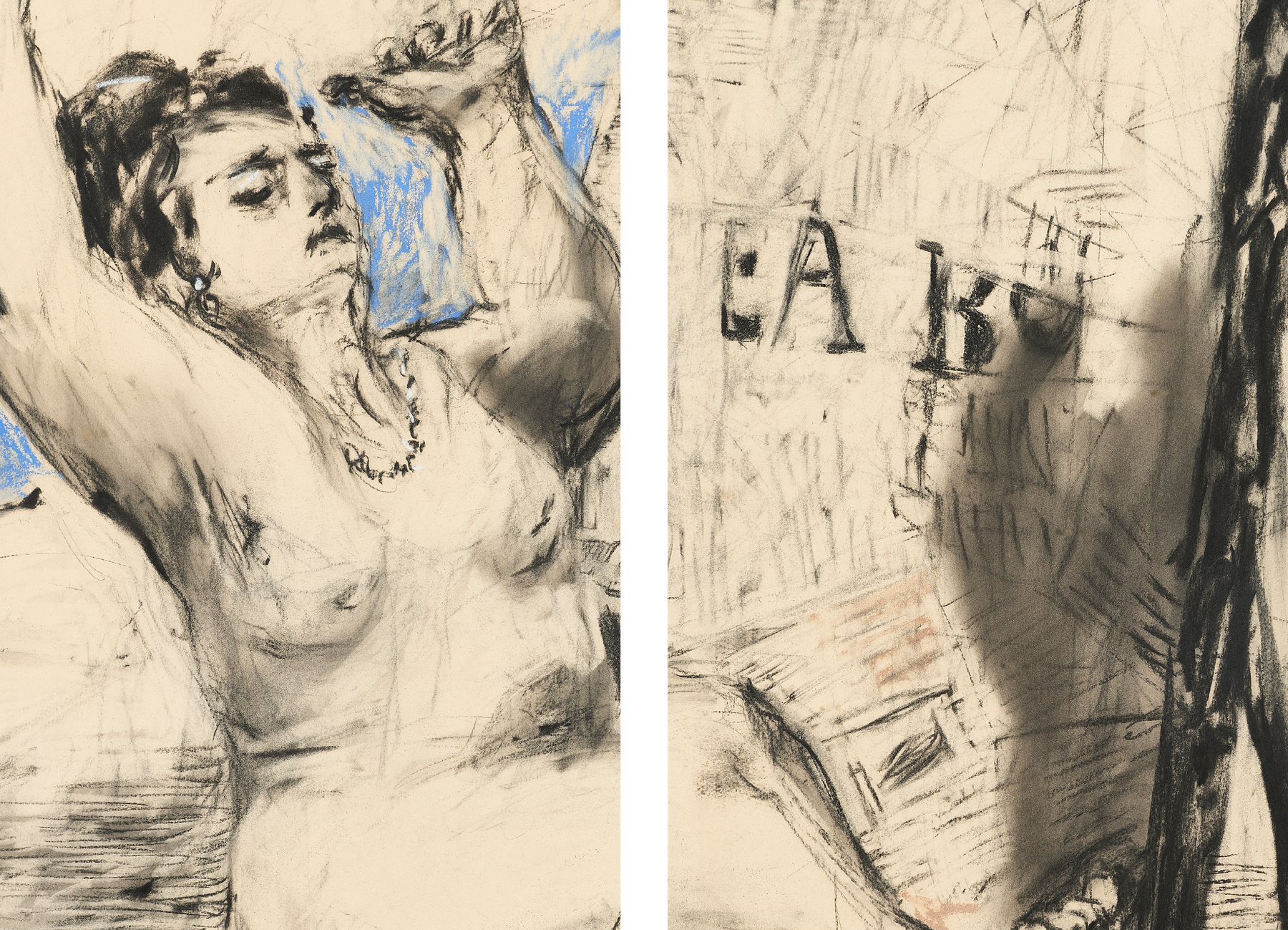
Drawing from Sobriety, Obesity and Growing Old (Mrs Eckstein, preparing for the day), 1991
Work: 135 x 108.5 cm (53.1 x 42.7 in.)
Frame: 164 x 136 cm (64.6 x 53.5 in.)
Unique
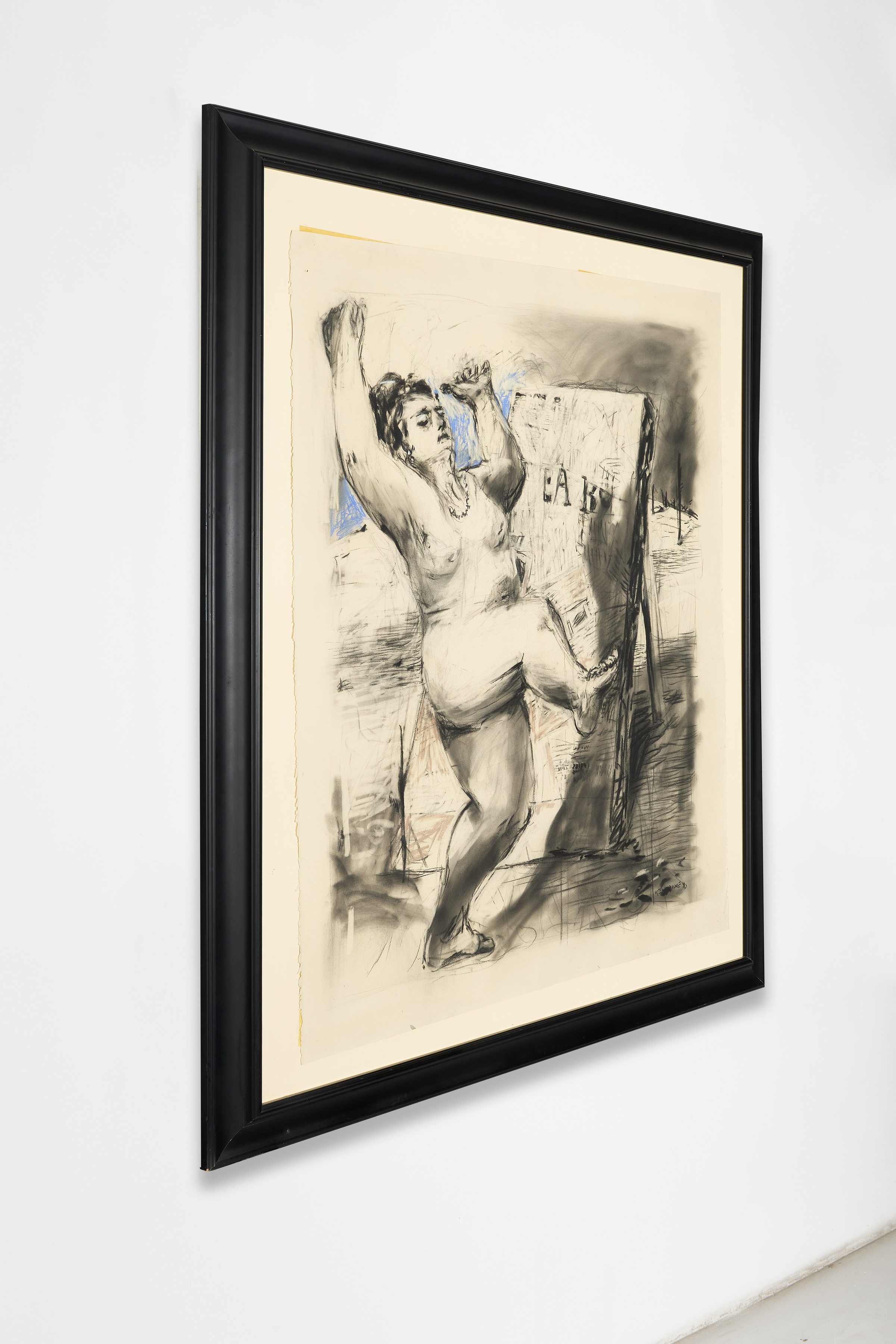
William Kentridge’s 'Drawings for Projection' or 'Soho Chronicles' series are perhaps the best known of all of his artworks, because they were the pieces that introduced the international art-going public to him as an artist, and specifically to what he describes as his 'Stone-Age Filmmaking' technique of photographing each frame whilst creating charcoal on paper drawings that hold the residual trace of each past gesture and activity.
'Sobriety, Obesity and Growing Old’ is the fourth in the series, and sees the Witwatersrand mine magnate Soho Eckstein resume his contest with his artistic, more romantic, emotive, but no less flawed, alter-ego Felix Teitlebaum, (who is himself an alter-ego of Kentridge’s), for Mrs Eckstein’s affections. Whilst we deliberately never learn of her name, many commentators have argued that she is the main subject of the films’ series; and this film sees an ageing Soho finally realise that it profits him nothing to own the earth (literally because of his profession) if he loses her, and dissolves his empire to try and win her back. This particular unique drawing, 'Sobriety, Obesity and Growing Old (Mrs Eckstein, preparing for the day)’ celebrates the moment that she realises his realisation, as well as Felix’s undying admiration, dancing naked at dawn, delighting in being desired in every sense, and savouring, in anticipation, the day ahead, and – in the knowledge that she has finally begun to become truly valued in ways that matter – her remaining months and years to come.
Provenance
Acquired directly from the artist
Private Collection, Johannesburg
Aspire Art Auctions, 4 March 2021
Private collection, Johannesburg
SAM NHLENGETHWA
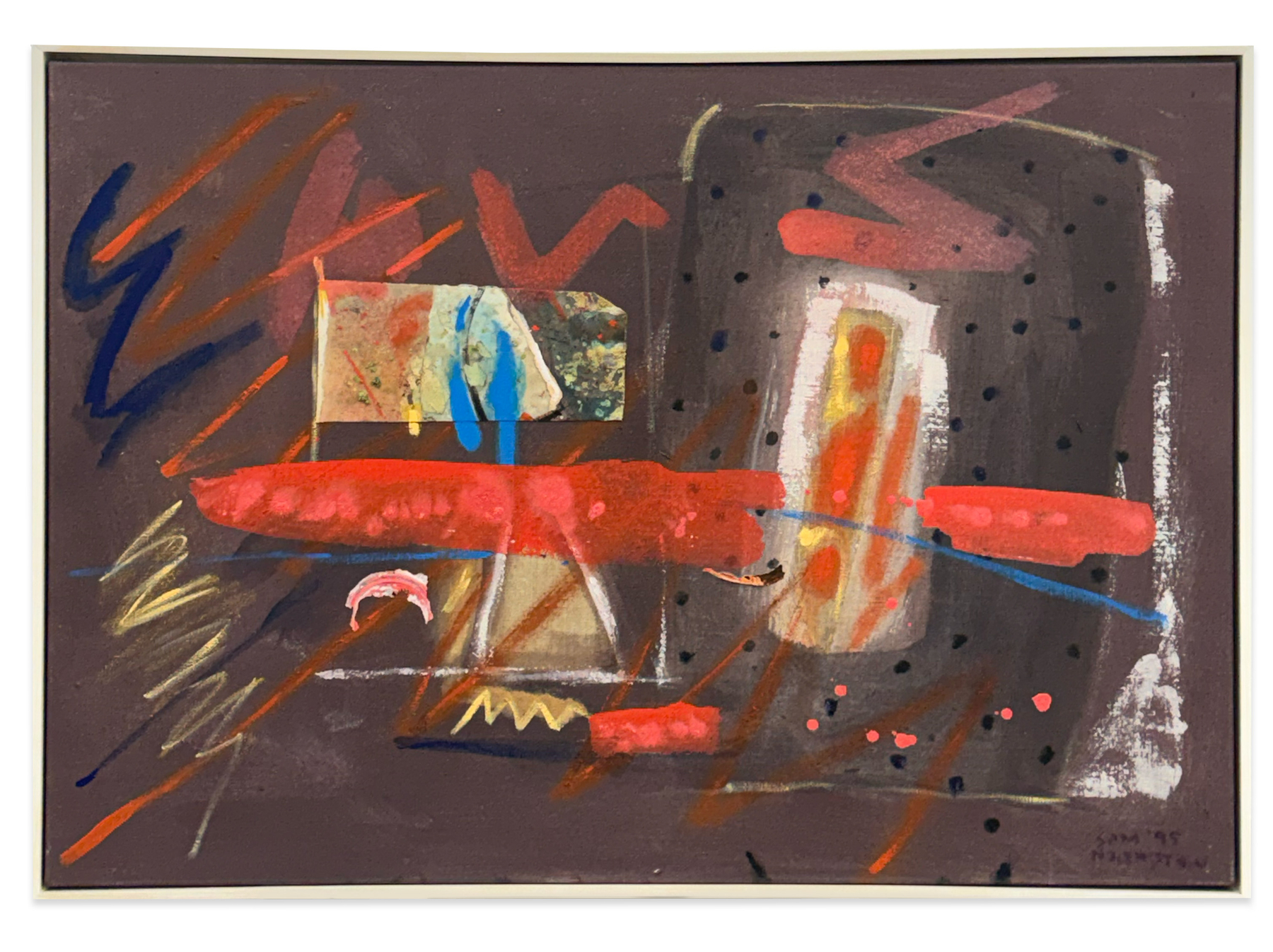
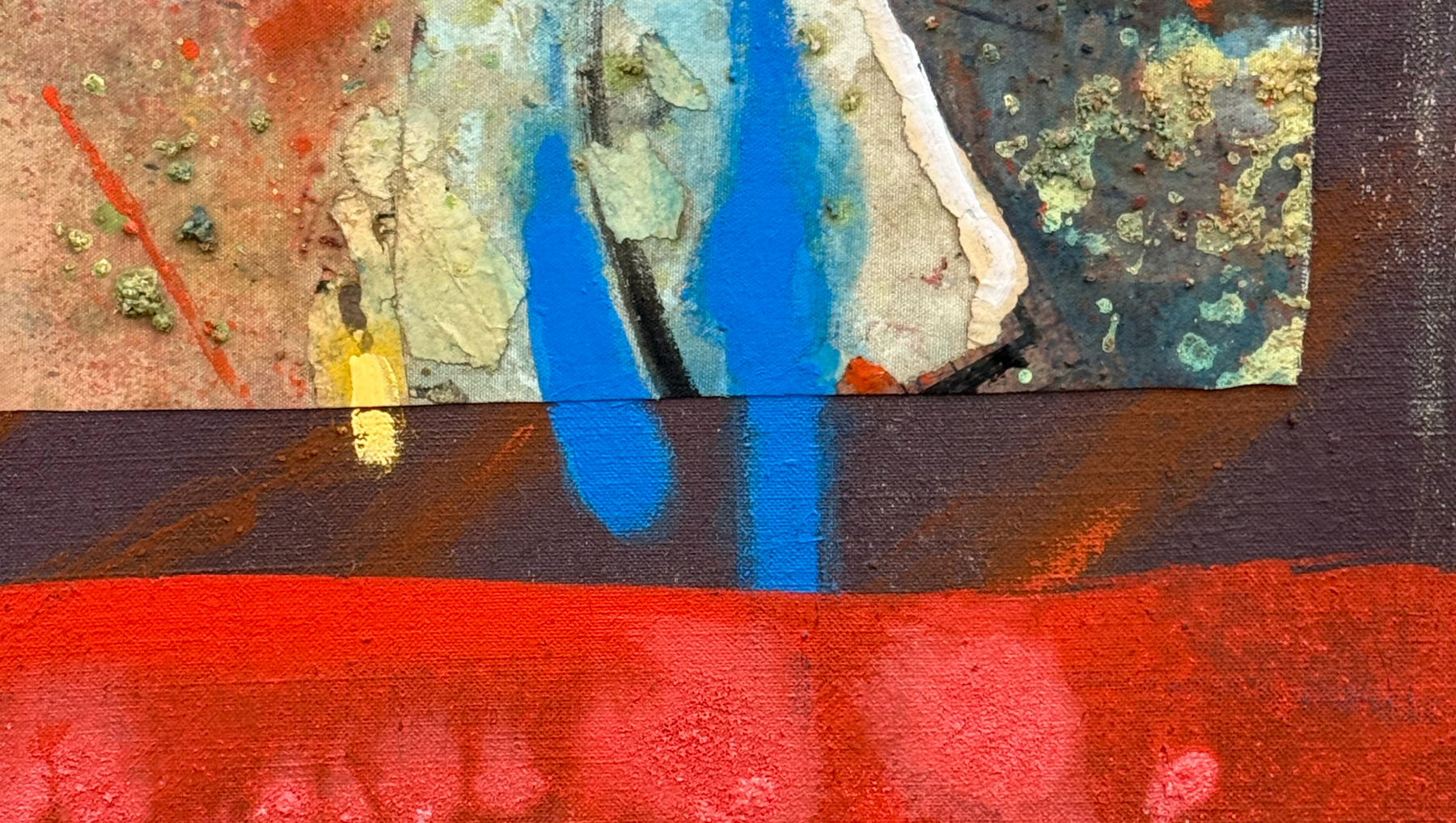
Senegal I, 1995
Oil, acrylic and fabric collage on canvas
Work: 85 x 120.5 cm (33.5 x 47.4 in.)
Frame: 88.5 x 123 x 7 cm (34.8 x 48.4 x 2.8 in.)
Senegal l (1995) is part of a series of abstract works produced during the AFRICA 95 workshop in Saint-Louis, Senegal. From South Africa, Nhlengethwa was selected to attend the workshop alongside David Koloane. This was the first workshop he attended on the African continent outside of his own country. The work was influenced by the surroundings in Saint-Louis and the natural colours used by fellow artists. Painting the Senegal series was also a moment which saw Nhlengethwa revisiting abstraction, a mode of expression he was exposed to at the Thupelo Workshops; a series of workshops for black artists initiated in 1985 by David Koloane and Bill Ainslie. Senegal lll was part of Nhlengethwa’s private collection. This show, therefore, presents its debut in London as well as within an exhibition context.
WALTER BATTISS
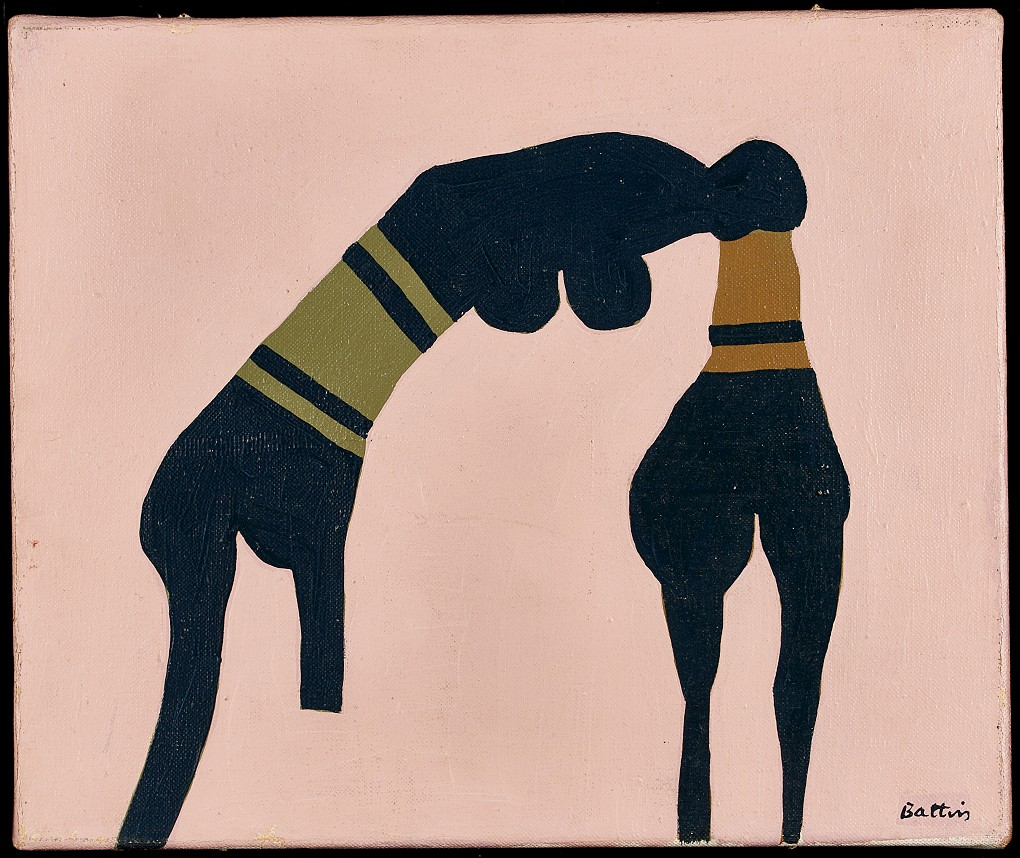
Two figures, c.1970's
Oil on canvas
Work: 25 x 30 cm (9.8 x 11.8 in.)
Provenance
Private Collection, Johannesburg
Thence by Descent
Aspire Art Auction 10/2016
Private Collection, South Africa
In Two figures, Walter Battiss presents a vibrant and imaginative dialogue between stylised forms, rendered in expressive colour and fluid line. The composition reflects his fascination with symbolism, myth, and cross-cultural visual languages, particularly evident in the flattened planes and rhythmic contours that echo elements of rock art and calligraphic mark-making. Created during a period marked by playful experimentation and the conceptual world of Fook Island, the work embodies a sense of spontaneity and poetic interaction, inviting viewers into a dreamlike space where human connection is distilled into bold, archetypal presence.
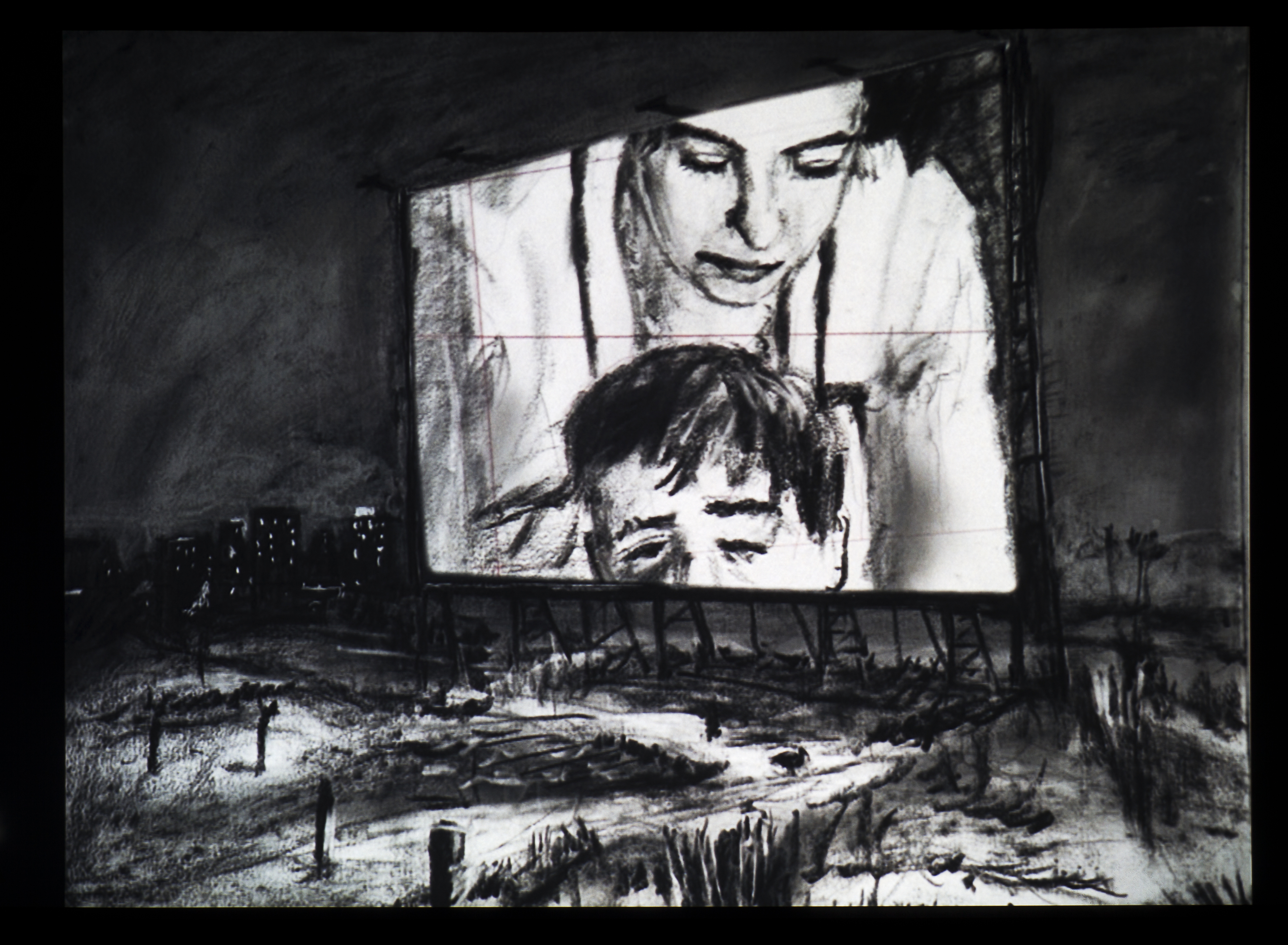
WILLIAM KENTRIDGE
Other Faces, 2011
Single channel video, colour, sound
9 minutes, 36 seconds
Edition 9 of 12
Exhibition History
William Kentridge, In Praise of Shadows, The Broad Museum, Los Angeles, CA, 12 November - 9 April 2023.
William Kentridge, Other Faces, EMMA (Espoo Museum of Modern Art), Espoo, Finland, 9 October 2019 - 26 January 2020.
William Kentridge, Why Should I Hesitate, Zeitz MOCAA, Cape Town, South Africa, 25 August 2019 - 23 March 2020.
William Kentridge, Five Themes, MoMA, New York, NY, 24 February - 17 May 2010.
William Kentridge, 9 Drawings for Projections, MoMA, New York, NY, 15 - 20 February, 2006.
The film is held in the following collections:
Southern Collection
Centre Pompidou
Fondation Louis Vuitton
William Kentridge is best known for his ten animated films, created over 22 years and set in Johannesburg, which began as a modest side project between exhibitions but evolved into a major contemporary narrative centered on Soho Eckstein, the Highveld mining magnate and the artist’s alter ego. Spanning South Africa’s transition from apartheid to democracy, the films use the country’s political upheaval as a backdrop rather than a subject, instead tracing Soho’s personal transformation from callous capitalist and cuckold to reflective penitent confronting his own frailty and mortality—an intimate human journey that gives the series its lasting emotional power.
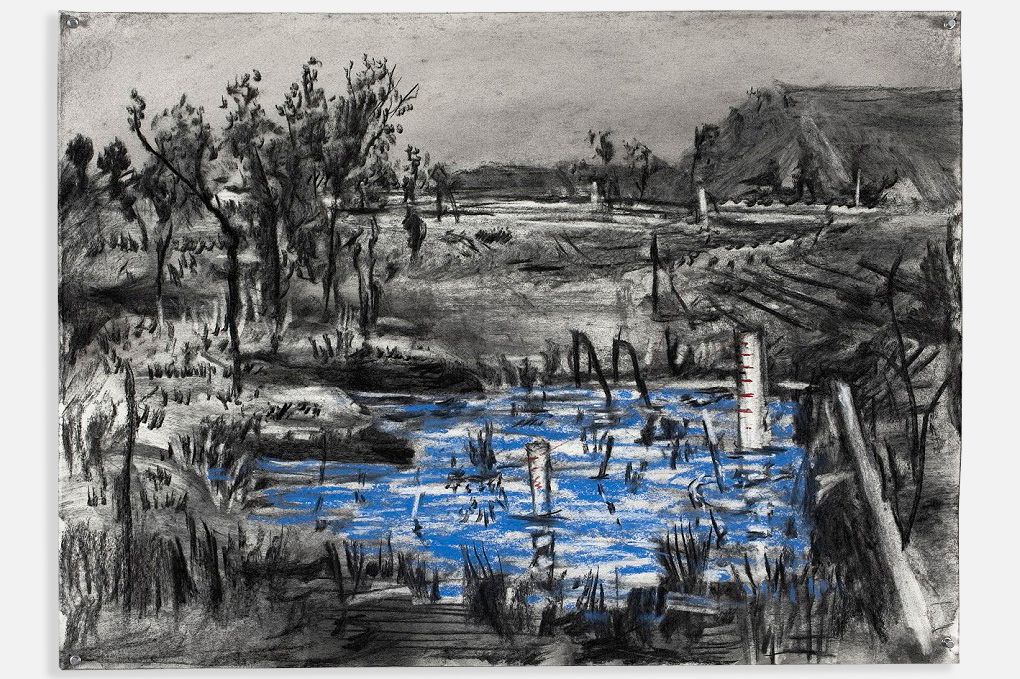
WILLIAM KENTRIDGE
Drawing for ‘Other Faces’ (Landscape, blue pool of water), 2011
Charcoal and coloured pencil on paper
Work: 57.5 x 78.5 cm (22.6 x 30.9 in.)
Unique
William Kentridge’s ‘Other Faces’ is the tenth in his celebrated ‘Drawings for Projection’ or 'Soho Chronicles’ series. It begins with scenes of old suburban Johannesburg, including garden sprinklers, crickets chirping, hadeda ibises and other familiarities, but with a pervasive sense of underlying tension throughout. Soon, we are witness to a downtown car accident between a black preacher and Soho Eckstein, which immediately escalates into an altercation with violent language and threats, then a gathering crowd, which becomes a threatening mob, all of which several writers have viewed as a metaphor for the lingering tensions and fractious inequalities and resentments of post-apartheid South Africa.
In addition to this altercation being interspersed with maps, shop signs, and charcoal portraits of street hawkers, Kentridge also draws scenes from Soho’s childhood (many created from photographs of the artist’s own parents and grandparents) as he plays with the notion of a seemingly idyllic white South African past life acting as misleading ‘escapist nostalgia’. And this particularly prescient, important, unique charcoal piece, 'Drawing for ‘Other Faces’ (Landscape, blue pool of water)’, epitomises such a scenario, in which its apparently tranquil pool set in the midst of a Witwatersrand landscape complete with mine-dump holds something of the uncanny, and the foreboding. In short, to paraphrase Kentridge, 'the pool ahead cannot be trusted’. Indeed, the markers appearing within it that ostensibly show the water’s depth and are there to protect bathers, resemble others in Kentridge’s future landscapes which are very much signifiers that recall the historic cartographies of annexation's darkest pasts and cruel Colonial contours.
Provenance
Goodman Gallery
Private Collection
Exhibition History
William Kentridge, Listen to the Echo, Museum Folkwang, Essen, Germany, 4 September 2025 - 18 January 2026.
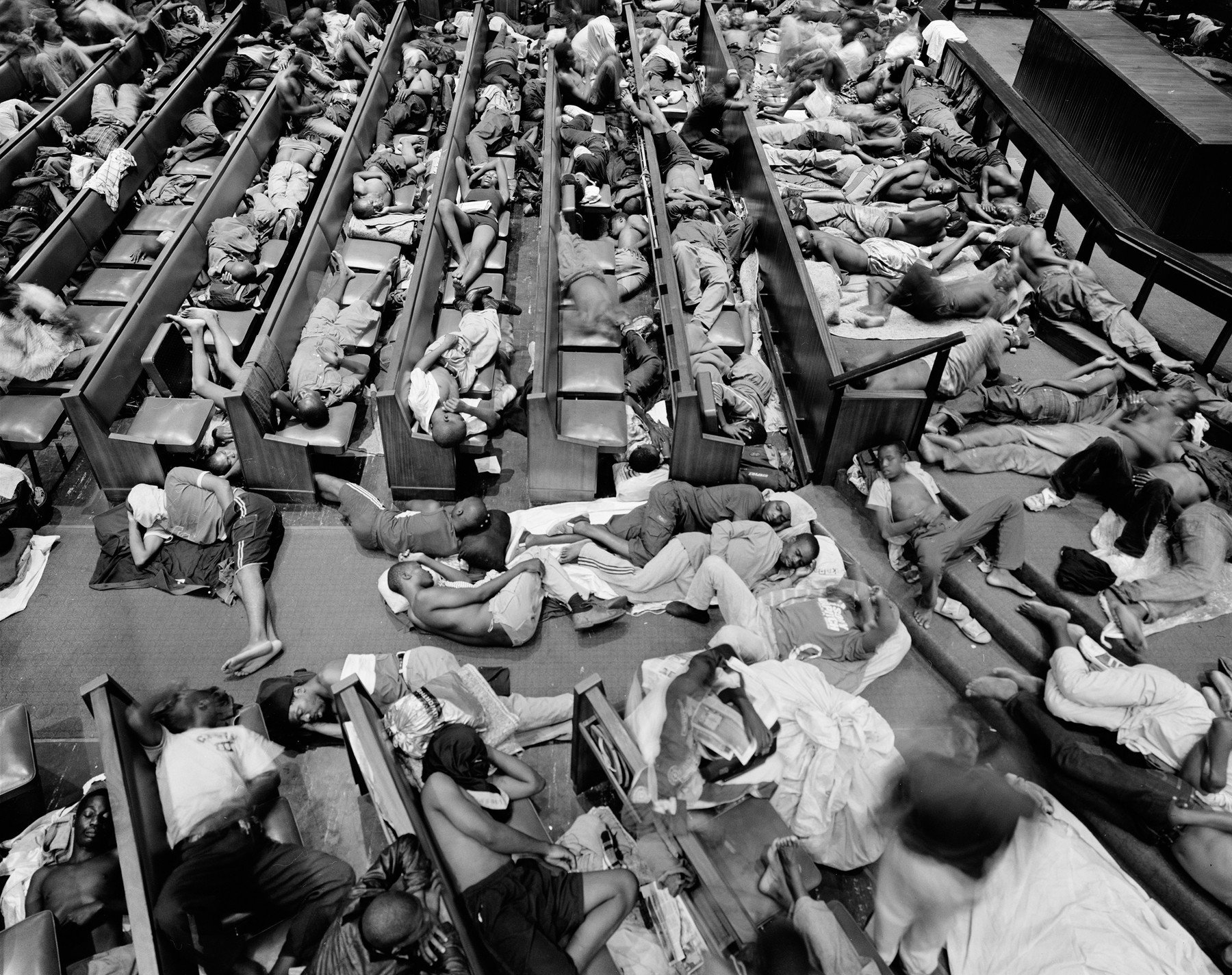
DAVID GOLDBLATT
Refugees from Zimbabwe and refugees from violent acts of xenophobia on the Witwatersrand,
sheltering in the Central Methodist Church, Kerk Street, Johannesburg. 22 March 2009, 2009
Silver gelatin print on fibre-based paper Work: 98 x 124 cm (38.6 x 48.8 in.)
Edition of 10
Provenance
Goodman Gallery, Johannesburg
Private Collection, South Africa
Exhibition History
David Goldblatt, TJ: Some things old, some things new and some much the same,
Goodman Gallery Johannesburg, 07/10/2010 - 06/11/2010
Publication
Kith Kin & Khaya, 2011; TJ, 2011; The Pursuit of Values, 2015.
I was drawn,” the late photographer David Goldblatt wrote, “not to the events of the time but to the quiet and commonplace where nothing ‘happened’ and yet all was contained and immanent.” A preeminent chronicler of South African life under apartheid and after, Goldblatt bore witness to how this life is written on the land, in its structures or their absence. Unconcerned with documenting significant historic moments, his photographs stand outside the events of the time and yet are eloquent of them. In his late career, Goldblatt continued to document the changes experienced by South Africans including the migration crisis from neighbouring countries. As ever his titles reveal the humanity of his subject and share his critical reflection on the values and conditions which have shaped the country; both ideological and tangible.
This is a rare print. Prints from this edition are in major collections including: The Walther Collection, The Jewish Museum, NY, Yale University Art Gallery, New Haven.
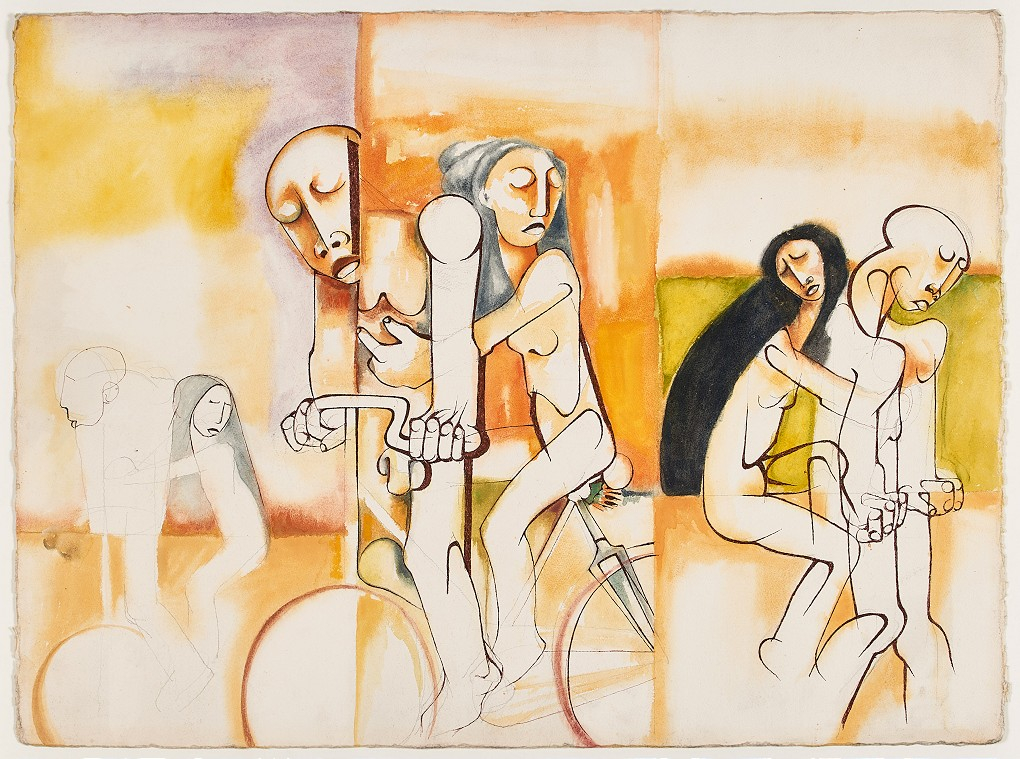
DUMILE FENI
Couple with Bicycle (ref # 31), circa 1983
Ink and watercolour on paper
Work: 56 x 76 cm (22 x 29.9 in.)
Unique
Dumile Femi’s name and reputation spread quickly in the art world of Johannesburg early in his career, and his strong, unflinching, expressive drawings made an indelible mark on the landscape of South African art. The image here is a rare work in colour - for an artist with a largely monochrome palette - depicting a tender moment of a couple. In the years from 1966 to 1968 there was a surge in interest in the work of black artists, and Dumile was now well networked in this white-black world of left-wing intellectuals. South African Justice Albie Sachs followed Dumile's career since first meeting him in London, and was very fond of the artist's 'deep romanticism.' "It was all in the form, the shape, and the delicacy of representation that made me feel that he was not exploiting hardship, not exploiting nudity and not exploiting Africanness to make a point. He is saying something about humanity, the humanity that he knows: an African humanity. It was the sort of thing in the face of which I wanted to weep and to smile at the same time."
Provenance
Private Collection, New York and South Africa
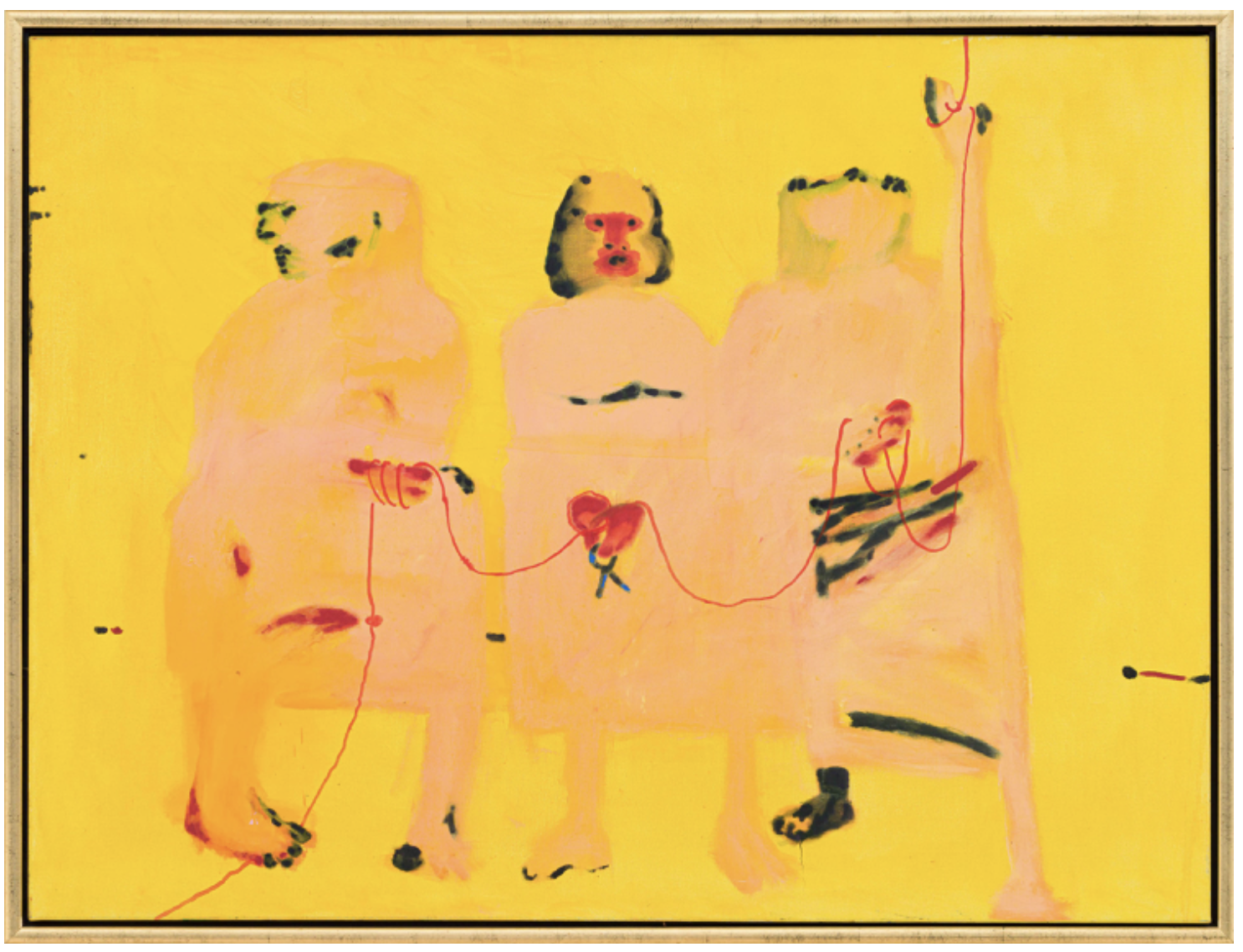
ROBERT HODGINS
A Scarlet Thread, 2001 – 2002
Oil on canvas
Work: 90 x 120 cm (35.4 x 47.2 in.)
Frame: 96 x 125.5 x 5 cm (37.8 x 49.4 x 2 in.)
A Scarlet Thread is an example of Robert Hodgins’ mature figurative language. The paint itself is becoming a psychological, symbolic device. The work centres on three figures rendered in loose, gestural brushwork. The composition is dominated by an intense red line or streak, the “scarlet thread,” which cuts across or binds the figure, operating simultaneously as a formal and metaphorical element. One could discuss the formal principles of art present in each work in depth but, ultimately, Hodgins was renowned for his desire to identify and to break formal boundaries and hierarchies of society. This desire is conveyed by Hodgins’ satirical commentary on the overarching institutions or systems in which we exist but seldom question, present in both the scenes depicted in his work and the manner in which the artist then titled his pieces.
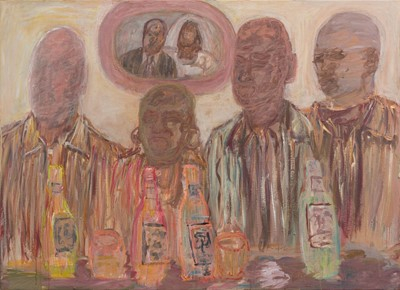
DAVID KOLOANE
Celebration, 1992
Oil on canvas
Work: 115 x 158 x 2.5 cm (45.3 x 62.2 x 1 in.)
Unique
Provenance
Private Collection, Cape Town
Museum collection, UAE
Through his expressive, evocative and poetic artwork, Koloane interrogated the socio-political and existential human condition, using Johannesburg as his primary subject matter. Koloane’s representations of Johannesburg are populated with images of cityscapes, townships, street life, jazz musicians, traffic jams, migration, refugees, dogs, and birds among others. Imaginatively treated, through the medium of painting, drawing, assemblage, printmaking and mixed media, Koloane’s scenes are a blend of exuberant and sombre, discernible and opaque pictorial narratives. ‘Celebration’ 1992 is a rare oil canvas painting in a larger scale, Koloane typically worked on smaller scale and on found materials, paper and board.. Pictured is a domestic scene of celebration, a group gathered around the table surrounded by empty bottles and cups. The title of the work obliquely references the key events of 1992 in which the first referendum
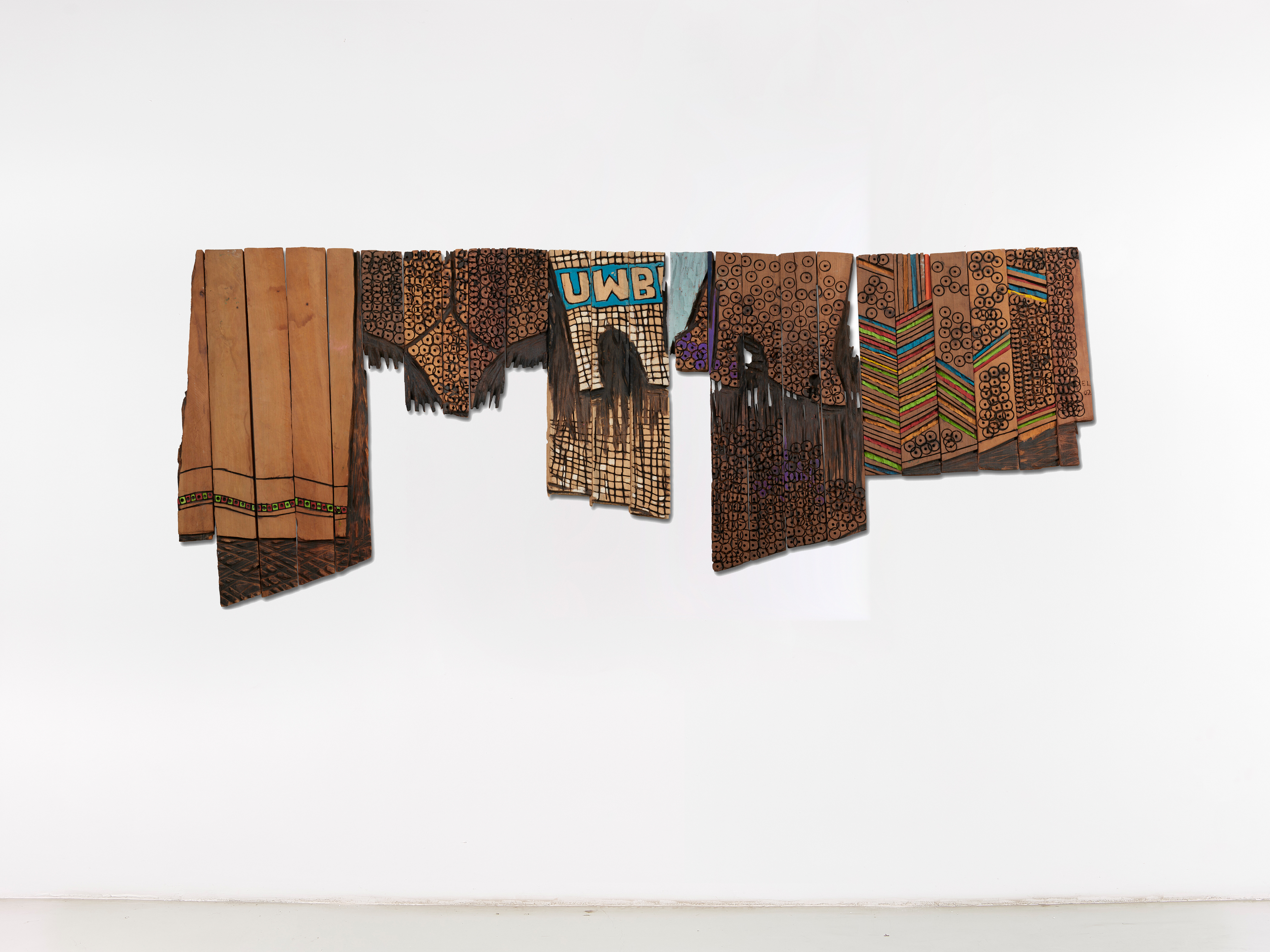
EL ANATSUI
The Drying Line, 2002
Wood
Work: 86.4 x 198.1 cm (34 x 78 in.)
Unique
Provenance
Artists Alliance Gallery, Accra
Private Collection, UK
Private Collection, South Africa
Exhibition History
Landing (again), Goodman Gallery New York 12/12/2024 - 31/01/2025
El Anatsui began teaching at the University of Nsukka in 1975, where at a time of great creative ferment following the end of the Civil War, he began his association with leading figures such as Professor Uche Okeke and Demas Nwoko, they became known as the Nsukka School. During this time he was working in wood, his preferred medium for the final quarter of the twentieth century. In 1980, while cutting logs during a residency in the United States, he describes a moment of clear realization, as he recognised the expressive qualities of the chainsaw as tool, and understood the additional sculptural possibilities of the age-old medium manipulated by powerful new tools, each with their own unique characteristics and graphic syntaxes.
In The Drying Line the carved wooden slats reveal the most common of daily sights, different cloths and items of clothing hung out to dry, we can recognise distinctive western branding on one of the garments, the other cloths and fabrics each carry their own distinctive patterns and styles and evoke the many different ethnic groups of which Nigeria is composed. El Anatsui playfully renders this vernacular motif, a striking example of his unparalleled inventiveness and his hunger to extend the range and breadth of wood as a sculptural medium.